Designing for Dyslexia
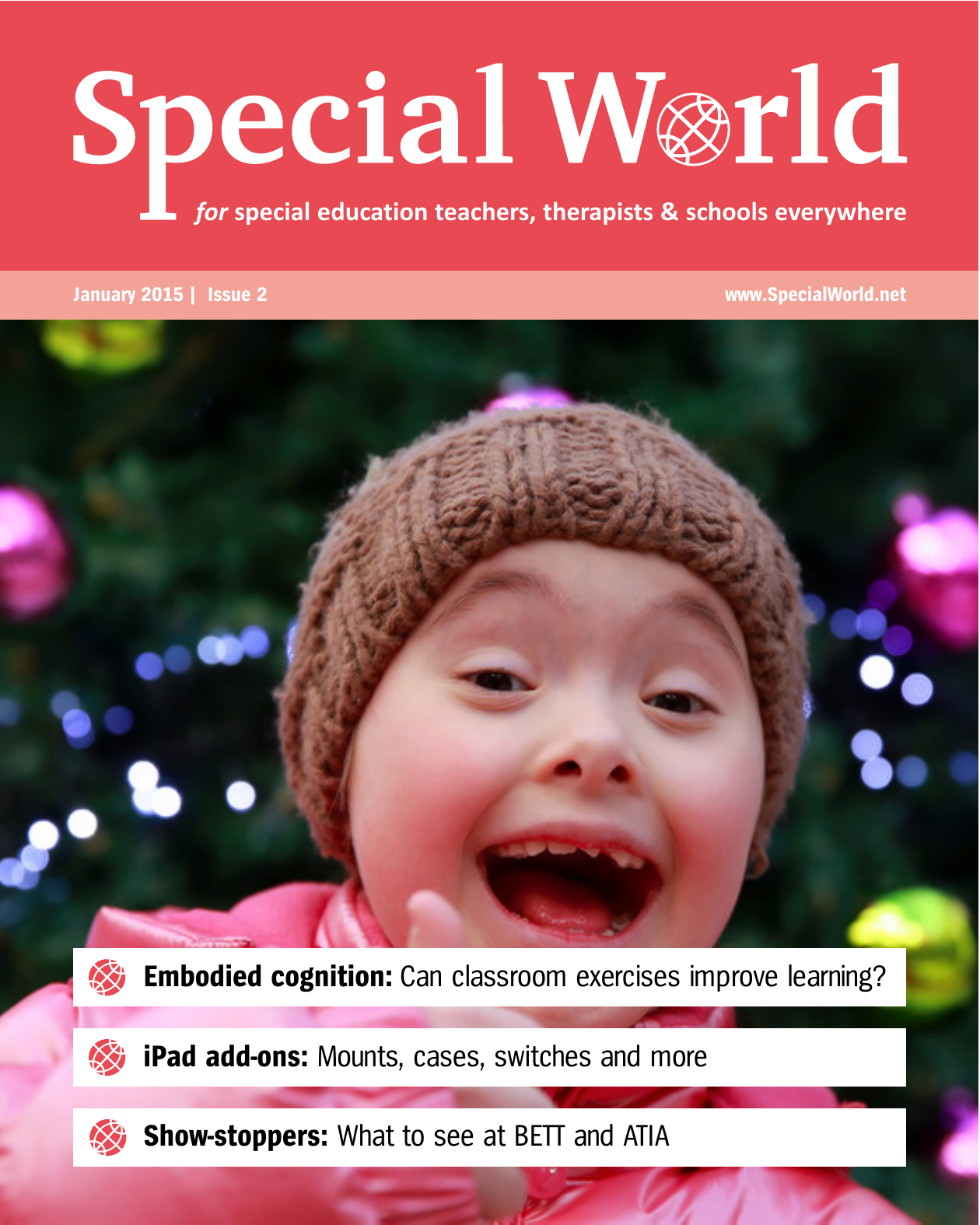
Special World Magazine, UK — January 2015. Article by Marco Iannacone describing the origin, design principles and scientific field testing of EdiTouch.
Open PDFDesigned in Italy by Marco Iannacone through Digitally Different Srl, EdiTouch supported students with dyslexia, Specific Learning Disorders and Special Educational Needs through assistive technologies, cognitive accessibility and evidence-based design.
It anticipated many themes now central to inclusive educational technology: Design for All, Universal Design for Learning, assistive technology mainstreaming, affordability, field validation and learner autonomy.
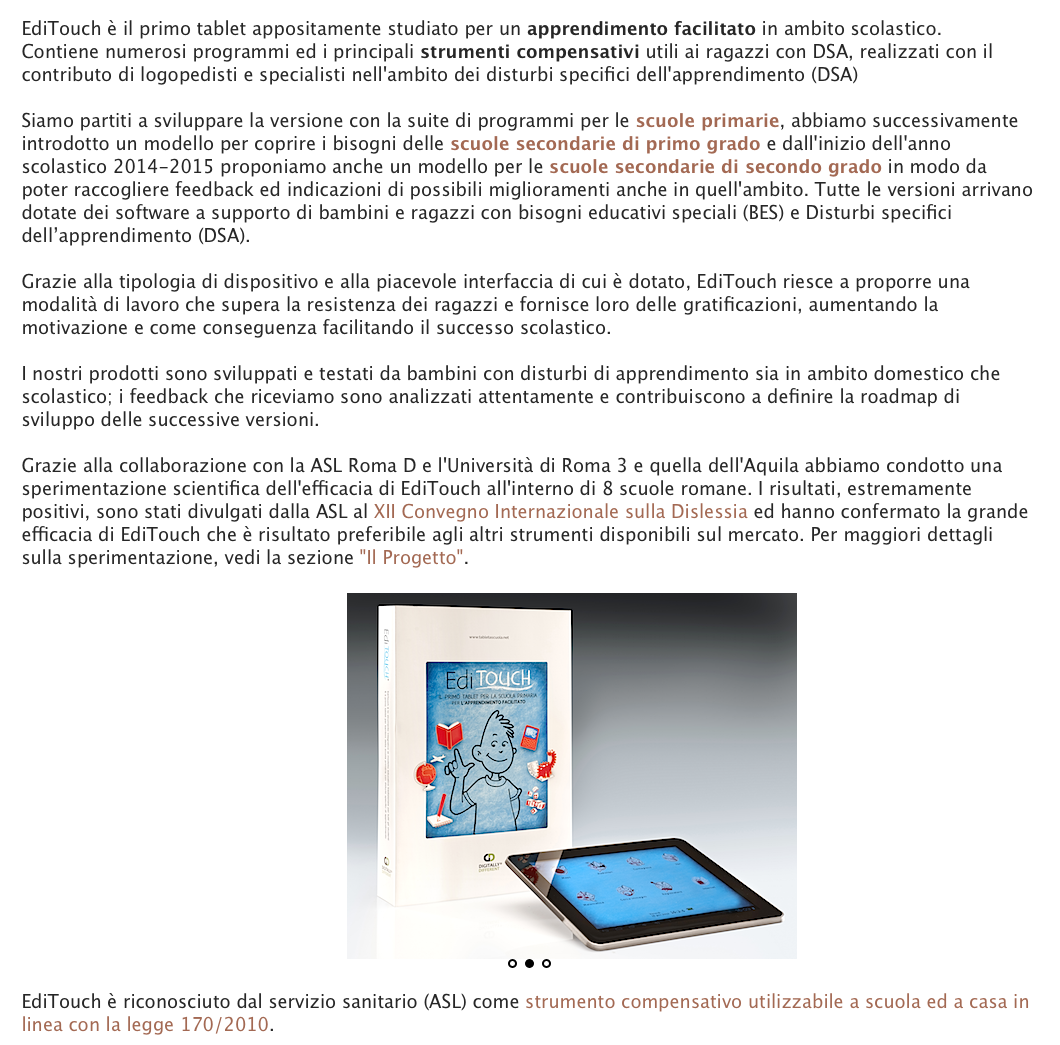
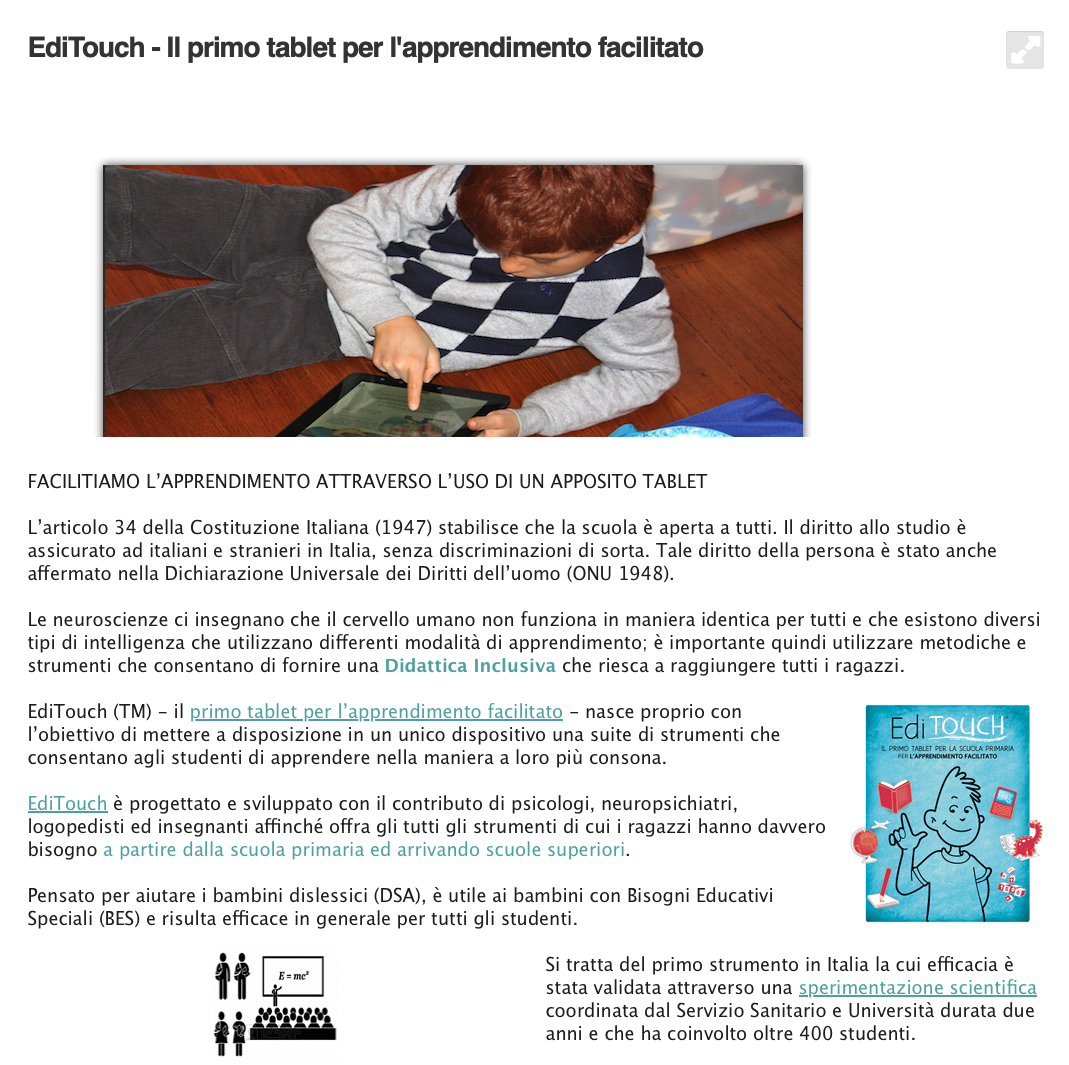
EdiTouch started as a personal response to a real educational problem.
As the father of a child with dyslexia, I was dissatisfied with the software and hardware solutions available at the time. Many existing compensatory tools were expensive, fragmented, difficult to use in everyday school contexts and often socially stigmatizing for younger students.
What began as a tool designed to support one child became a multidisciplinary EdTech project developed with speech therapists, neuropsychiatrists, teachers, parents and students.
The result was not simply a tablet with educational apps installed on it. EdiTouch was conceived as an integrated learning ecosystem: a hardware-and-software solution designed specifically to make reading, studying, organizing information and working autonomously more accessible for students with different cognitive profiles.
Dyslexia is not a lack of intelligence. It is a different way of processing written language.
Many educational environments are still designed around a narrow idea of the “standard student”: fast reading, linear note-taking, silent text-based study, high tolerance for abstraction, and strong executive organization.
At the time EdiTouch was developed, compensatory tools were often based on traditional PCs and commercial software packages. They could be powerful, but also introduced new problems:
For EdiTouch, this was not a motivational slogan. It was a design requirement.
The goal was not to create a “special” device for “special” students. The goal was to design a learning environment that could reduce cognitive load, increase autonomy, lower stigma and make compensatory tools usable in ordinary school and family life.
This meant designing for students with dyslexia and Special Educational Needs, while also creating tools that could support a much broader range of learners.
A badly designed tool can turn a manageable learning difference into a daily obstacle. A well-designed tool can make autonomy possible.
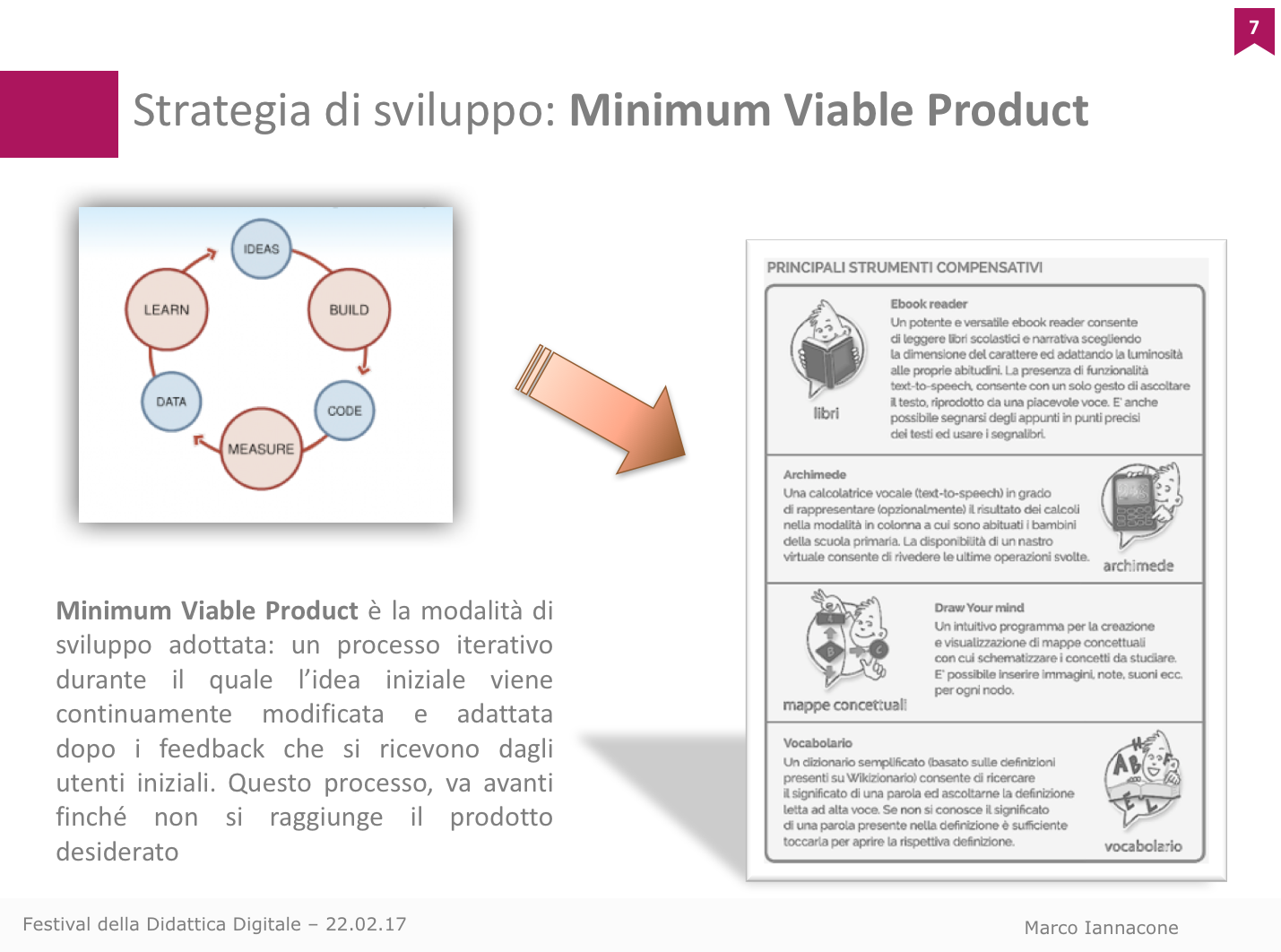
EdiTouch combined dedicated software, simplified interaction, readability choices and controlled access to reduce friction during study time.
Text-to-speech ebook reading, high-readability fonts and simplified access to digital texts.
Vocal calculator, concept mapping, dictionary and visual organization tools for daily learning activities.
Teacher and parent controls made it possible to limit accessible apps during study time.
The roadmap evolved through feedback from students, families, teachers and clinical specialists.
EdiTouch was developed iteratively. Feedback from students, parents, teachers, speech therapists and neuropsychiatrists was used to improve the interface, the software roadmap and the overall learning experience.
This was one of the project’s central assumptions: assistive technology should not be designed in isolation from the people who actually use it.
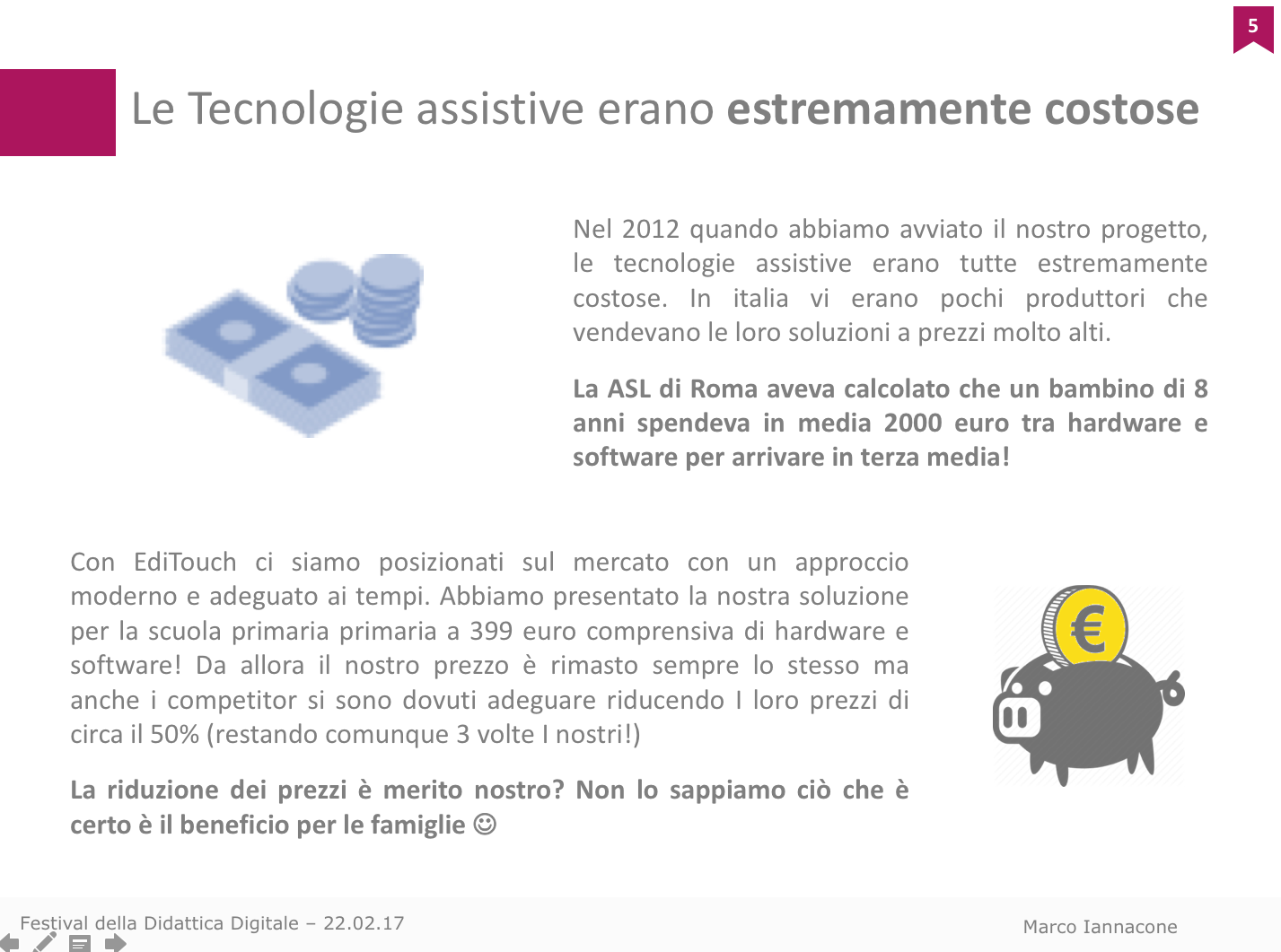
Accessibility is not only a matter of interface design. It is also a matter of economic access.
At the time, traditional assistive technology packages based on PCs and commercial software could cost families up to approximately €2,000. This created an additional barrier for students who already faced educational difficulties.
EdiTouch was designed to lower that barrier through an integrated hardware-and-software solution at a fraction of that cost. The goal was not to create a cheaper compromise, but to make assistive technology more accessible without sacrificing educational value.
Between 2012 and 2014, EdiTouch was evaluated through an 18-month scientific field trial involving schools, the Italian National Health Service, universities, teachers, families and students.
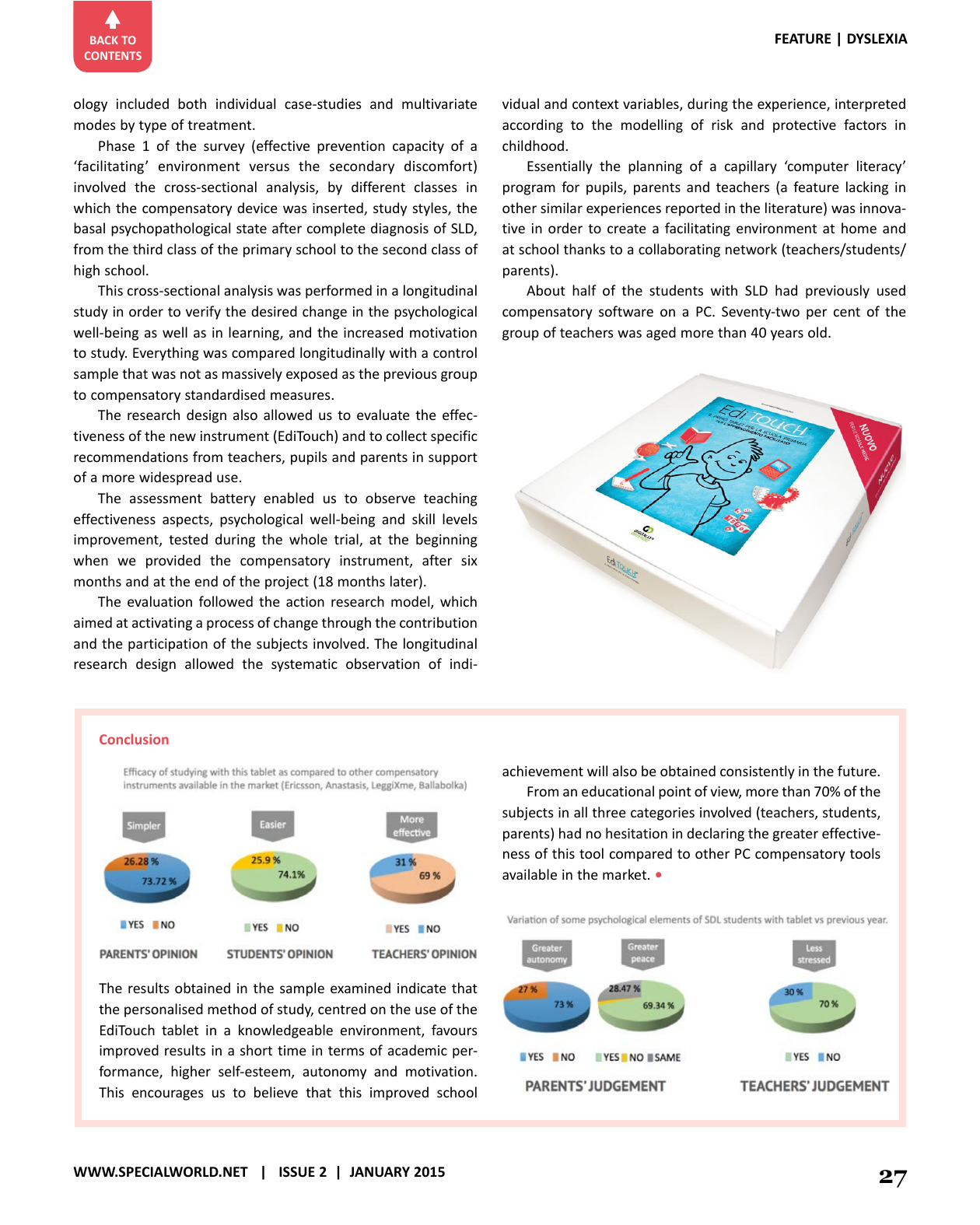
The most important result was not only that students could use the tool. It was that the tool could become part of a more aware and inclusive learning environment, connecting students, families and schools around a shared method of study.
More than 70% of the teachers, students and parents involved reported that EdiTouch was more effective than other PC-based compensatory tools available at the time.
A small selection of documents is enough here. This is not a press-clipping landfill, mercifully.
Special World Magazine, UK — January 2015. Article by Marco Iannacone describing the origin, design principles and scientific field testing of EdiTouch.
Open PDF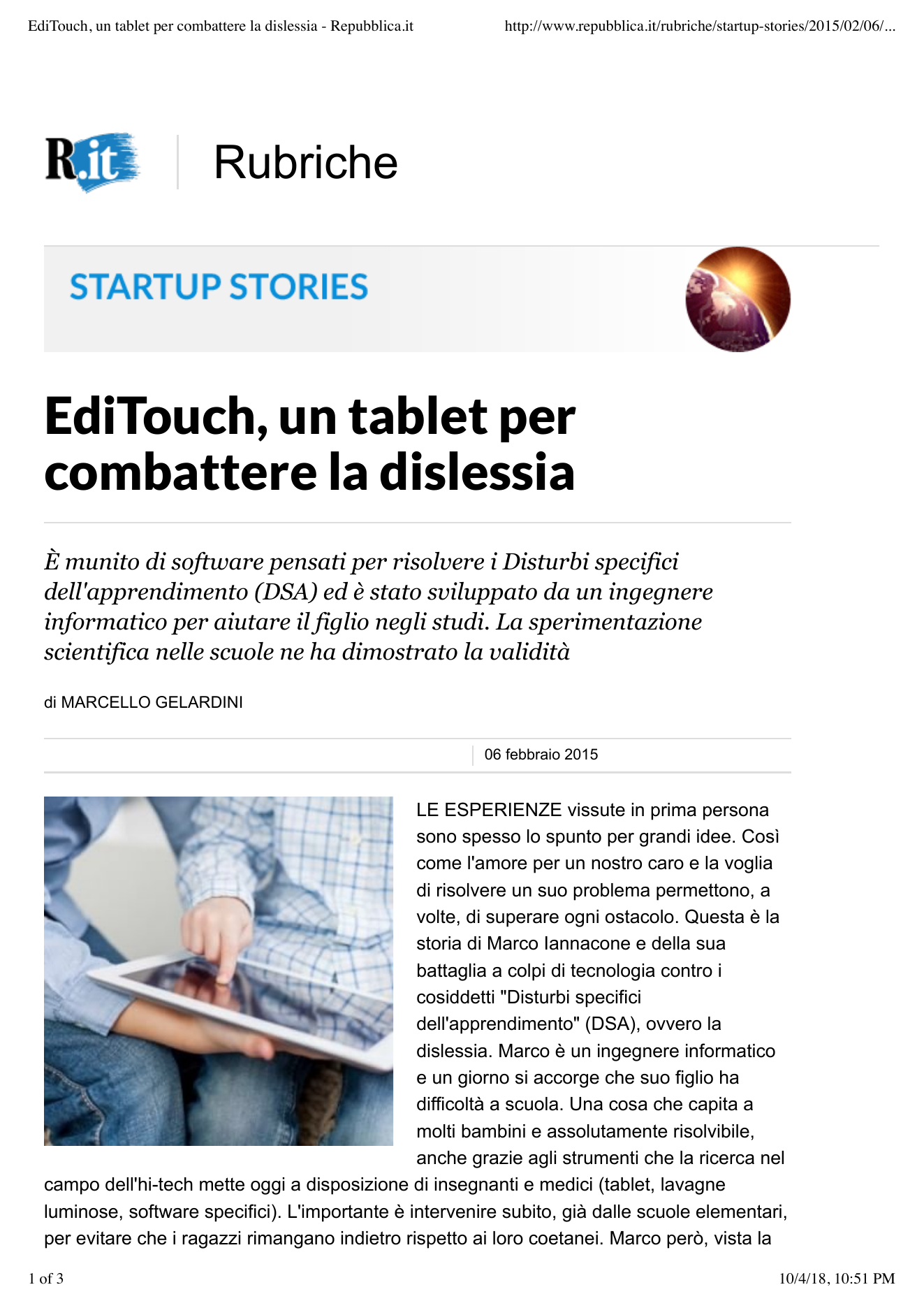
Repubblica — 2015. National media article describing EdiTouch as a personalized ecosystem developed from a personal need and validated in schools.
Open PDF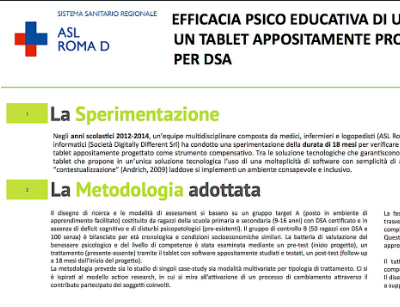
ASL Roma D / DSAeTecnologie.info — 2014. Official documentation of the 18-month field trial, including the health authority’s efficacy statement and an infographic summary of outcomes. The research was presented in scientific and specialist contexts, including the XII International Conference on Dyslexia in San Marino.
View results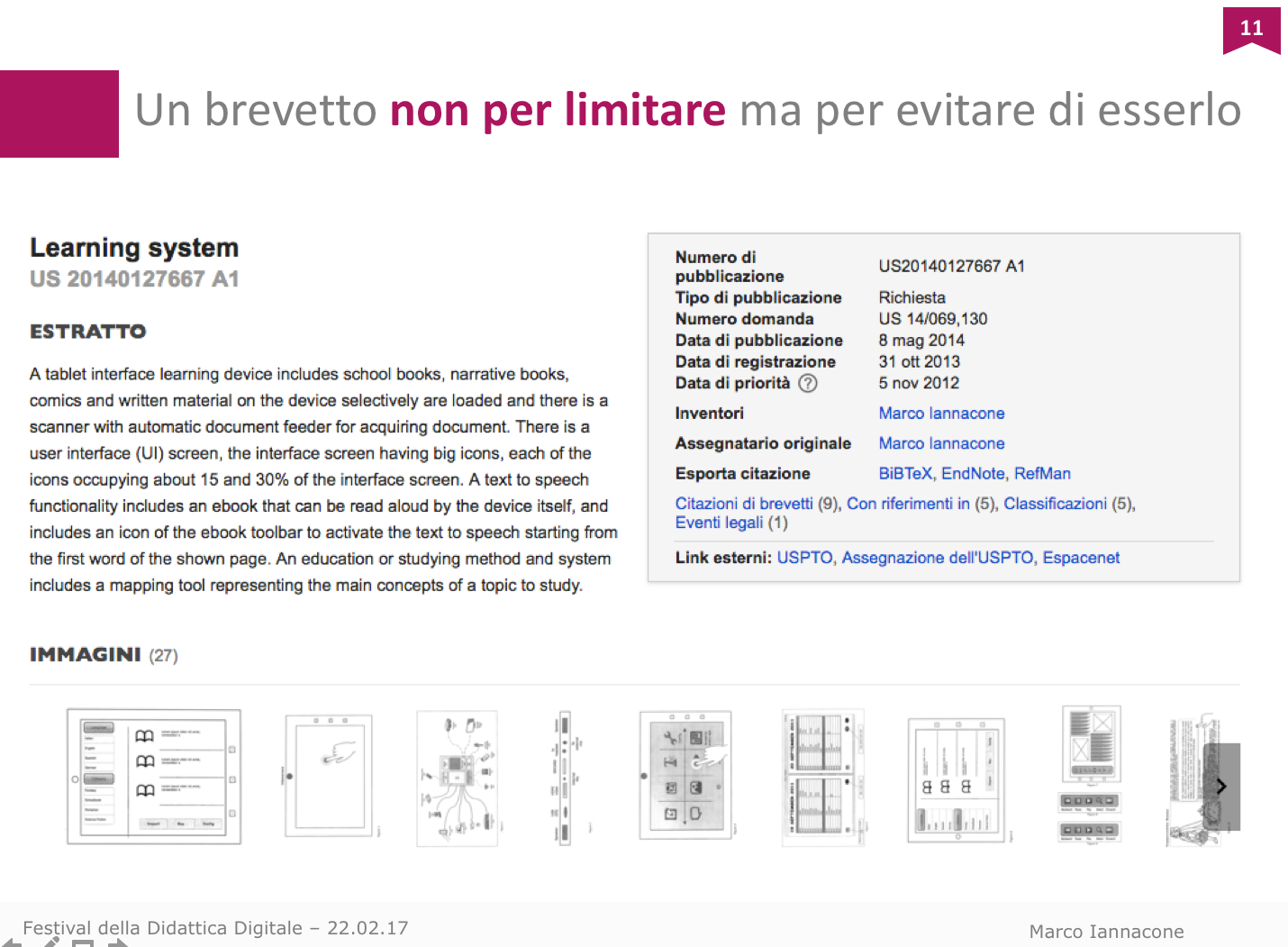
US 20140127667 A1. Patent covering aspects of a tablet-based learning interface, assistive reading, text-to-speech interaction and concept mapping functions.
Read contextEdiTouch was recognized across educational, institutional, technology and media contexts.
Featured in the SENnet innovation report and presented in Brussels at the workshop “Transforming the classroom: tablets as assistive technology.”
Presented at the Chamber of Deputies during the Tecnologia Solidale parliamentary event series on inclusion and social innovation.
EdiTouch / Digitally Different was named a Gartner Cool Vendor in Education.
Featured in a UK publication for special education teachers, therapists and schools.
Presented in policy and education innovation contexts, including Design for All and validated assistive technology themes.
EdiTouch also received broad public and media attention in Italy, with coverage across national television news programs, newspapers, magazines and specialized education and health publications.
In 2017, EdiTouch was also used on screen in the Italian television series Sorelle, where the storyline included a child with dyslexia using EdiTouch as an assistive learning tool. That visibility mattered: it showed that EdiTouch had become recognizable enough to represent, in a mainstream TV narrative, a credible and realistic support tool for dyslexia.
EdiTouch led to the patent Learning System — US 20140127667 A1, covering aspects of a tablet-based learning interface, assistive reading tools, text-to-speech interaction and concept mapping functions.
The purpose of the patent was not to restrict educational access. It was to protect the ability to develop and distribute an inclusive learning model without being constrained by larger market players.
EdiTouch was also an educational communication project.
Alongside product development and scientific validation, I produced an animated explainer video to help students, parents and teachers understand dyslexia in accessible, non-pathologizing language.
The video explained dyslexia not as a lack of intelligence, but as a different way of processing written language. It also introduced the idea that the right tools can reduce cognitive load, support autonomy and help students express abilities that traditional learning environments often fail to recognize.
EdiTouch was not a startup chasing trends. It was applied research translated into a real product.
Accessibility was not added later. It shaped the whole learning environment.
The project addressed reading, attention, motivation, autonomy and emotional well-being.
The tablet format helped reduce the feeling of being visibly different from classmates.
The project was evaluated through a long field trial involving real schools and real users.
Economic access was treated as part of educational accessibility, not as an afterthought.
The roadmap was shaped with specialists, teachers, families and students.
EdiTouch is no longer commercially available, but its core questions remain deeply relevant.
How can technology adapt to cognitive diversity? How can educational tools support autonomy rather than dependency? How can product design reduce stigma instead of reinforcing it? How can educational technology be validated through evidence instead of marketing enthusiasm?
These questions continue to guide my current research and development work on AI tutoring systems designed according to the same inclusive principle: supporting neurotypical students, students with Special Educational Needs, students with Specific Learning Disorders and high-potential learners within a common learning environment.
The technology has changed. The principle has not.
EdiTouch was built on a simple conviction: educational technology should not force students to compensate for poor design.